
When Does Organizational Change Become Institutional Betrayal?
The Scott Pelley story isn't just about journalism. It's about whether employees can challenge leadership without becoming the problem.

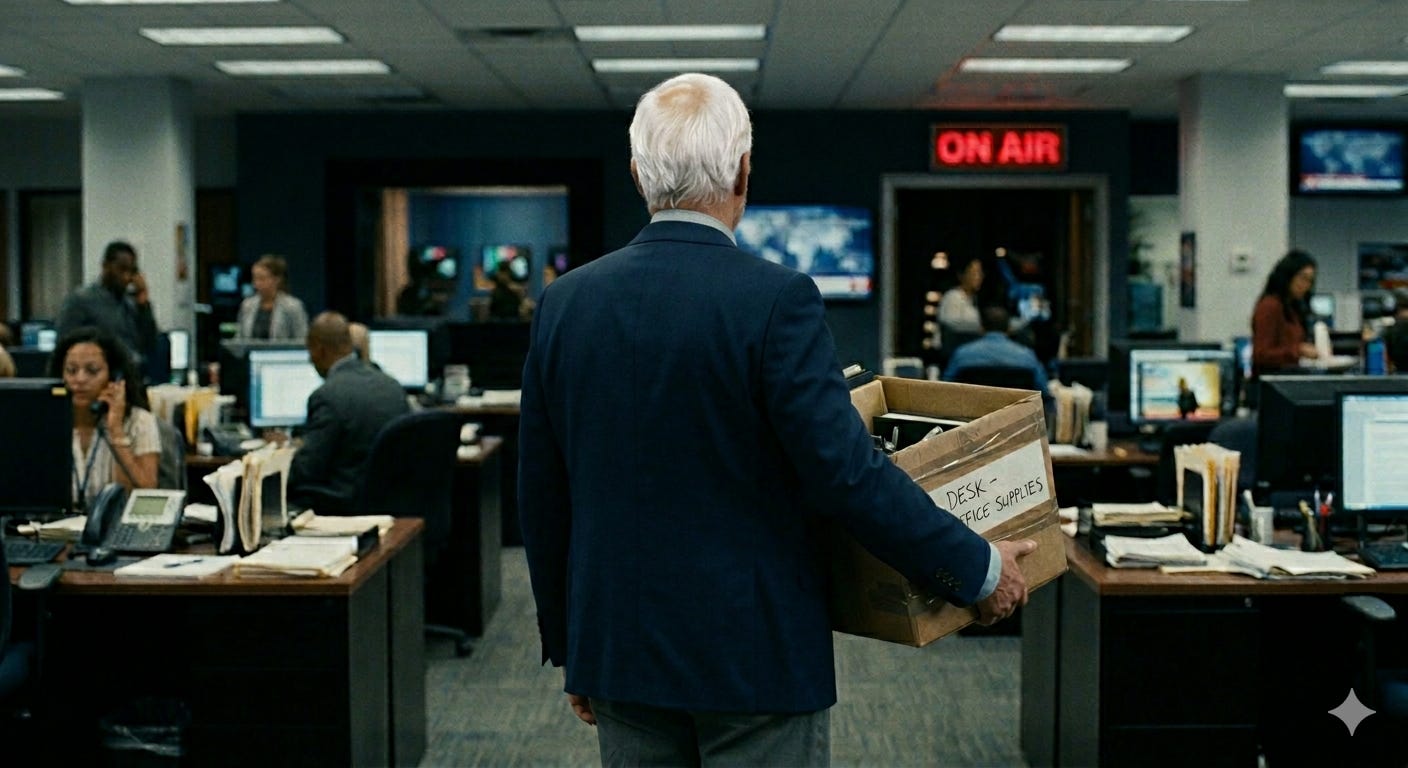
The firing of veteran 60 Minutes correspondent Scott Pelley has sparked a debate that reaches far beyond journalism.
Some view Pelley as a respected employee who spoke up about changes he believed were harming the integrity of his organization.
Others view him as a high-profile employee who became unwilling to support leadership’s vision for the future.
Both explanations may contain elements of truth.
But from a workplace abuse perspective, the most important question isn’t whether Scott Pelley or CBS leadership is right.
The more important question is:
What should happen when employees strongly disagree with organizational leadership?
Because the answer to that question often determines whether a workplace remains psychologically safe—or becomes psychologically unsafe.
The Facts We Know
This conflict did not emerge overnight.
In April 2025, longtime 60 Minutes executive producer Bill Owens resigned, stating he could no longer exercise the editorial independence he believed was necessary to run the program. Multiple major news organizations reported Owens cited concerns about increasing oversight and pressure regarding editorial decisions.
In the months that followed, additional departures occurred within CBS News amid broader organizational changes tied to new leadership and corporate restructuring. Concerns about editorial independence became a recurring theme in public reporting about the network.
Pelley emerged as one of the most vocal critics of those changes. He publicly questioned decisions being made by CBS and Paramount leadership and expressed concern about the future direction of 60 Minutes.
On June 2, 2026, CBS terminated Pelley’s employment following a series of escalating internal conflicts. CBS leadership stated that trust had broken down and that Pelley had become openly antagonistic toward the program’s future direction. Pelley disputes aspects of that characterization.
The public is now left trying to determine what happened.
And that is where workplace psychology becomes relevant.
The Mistake People Make About Workplace Abuse
Most people assume workplace abuse is obvious.
A screaming boss.
Public humiliation.
Threats.
Harassment.
Sometimes it is.
But many psychologically harmful workplaces look much more professional.
The most damaging workplace environments often maintain a polished appearance while slowly eliminating disagreement, criticism, and accountability.
That process rarely begins with obvious hostility.
Instead, it often starts with organizational change.
A new leader arrives.
A new strategy is announced.
A new vision is presented.
None of that is inherently problematic.
The question is how the organization responds when employees raise concerns.
Healthy Workplaces Allow Disagreement
One of the strongest indicators of psychological safety is not whether people agree.
It is whether people can disagree without fear.
In psychologically healthy workplaces:
Employees can challenge decisions respectfully.
Leaders are willing to hear uncomfortable feedback.
Concerns are evaluated on their merits rather than dismissed because of who raised them.
People can question leadership without automatically being viewed as disloyal.
Employees do not have to choose between honesty and job security.
Research on psychological safety, including the work of organizational scholar Amy Edmondson, consistently finds that high-performing organizations encourage speaking up, surfacing concerns, and constructive disagreement.
Psychological safety does not mean employees always get their way.
It means they can participate in difficult conversations without fear of punishment.
Unhealthy Workplaces Punish Dissent
Psychologically unsafe organizations often follow a different pattern.
Employees raise concerns.
The concerns themselves are never fully addressed.
Instead, attention shifts to the employee. Questions become:
Why are they causing conflict?
Why are they being negative?
Why can’t they get on board?
Why aren’t they being collaborative?
The issue disappears.
The employee becomes the issue.
This pattern appears so frequently in workplace abuse cases that many targets recognize it immediately.
The original concern gets buried beneath conversations about attitude, professionalism, culture fit, or resistance to change.
Sometimes those concerns are legitimate.
Sometimes they are being used to avoid addressing uncomfortable truths.
That distinction is often difficult to determine from the outside.
Is This Issue Gaslighting?
Many people have described the CBS situation as gaslighting.
Gaslighting is not merely disagreement.
Gaslighting occurs when people are encouraged to distrust their own observations and perceptions.
At this point, there is clear evidence that significant changes occurred within CBS News and 60 Minutes. Multiple senior leaders departed. Multiple journalists publicly raised concerns about editorial independence. Internal conflicts became highly visible.
Those events are real.
They happened.
The debate is about what those events mean.
CBS leadership appears to believe these changes are necessary for the future of the organization. Pelley and others appear to believe the changes undermine the values that made 60 Minutes successful.
That is not necessarily gaslighting.
It is at least a struggle over competing narratives.
But workers should pay attention whenever they find themselves repeatedly asking:
“Am I seeing what I think I’m seeing?”
That question often emerges in psychologically unsafe environments.
Institutional Betrayal Is About More Than One Employee
The Scott Pelley story resonates because many workers recognize pieces of their own experience.
Maybe not in a newsroom.
But in a nonprofit.
A hospital.
A university.
A government agency.
A corporation.
Workers often describe moments when leadership changes suddenly alter the culture of an organization.
People who once had influence lose it.
Longstanding values seem negotiable.
Questions become unwelcome.
Fear increases.
People stop speaking honestly.
The organization insists everything is fine.
Employees feel increasingly disconnected from what they observe.
That experience has a name.
Institutional betrayal.
Institutional betrayal occurs when an organization violates the trust of the people who depend on it—especially when it ignores concerns, punishes truth-telling, or prioritizes self-protection over transparency.
The Bigger Question
The public may never know every detail of what happened between Scott Pelley and CBS leadership.
But that part is not the most important lesson.
The most important lesson is that psychologically safe workplaces do not require agreement.
They require the ability to disagree safely.
The true test of workplace culture is not how leaders treat employees who support them.
It is how leaders respond to employees who challenge them.
Can people raise concerns without becoming targets?
Can uncomfortable conversations occur without retaliation?
Can organizations tolerate dissent without erasing dissenters?
Those questions matter far beyond journalism.
Because every workplace eventually faces a moment when someone speaks up.
The organizations that remain healthy are not the ones that silence those voices.
They are the ones confident enough to hear them.